Hydrogen facilities
World-class institutes, facilities and departments
-
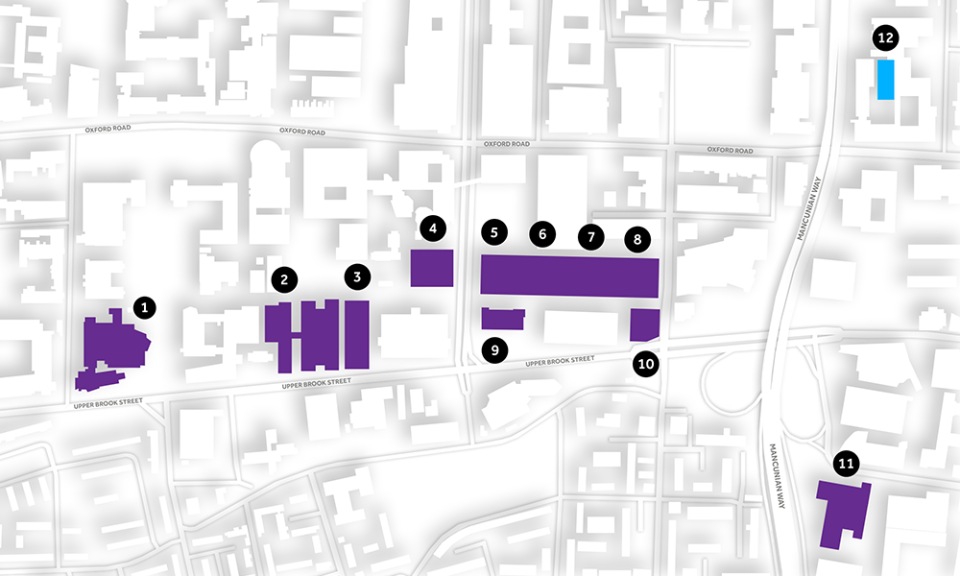
1. The Department of Chemistry
 The University of Manchester
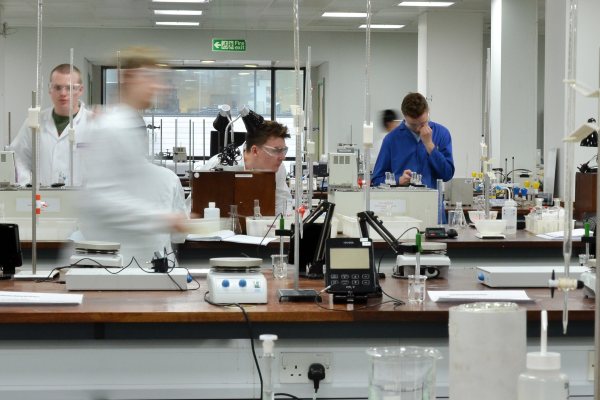
The Department of Chemistry
A UK leader in hydrogen storage and photocatalysis research, combining a rich legacy – including Nobel Prize-winning members – with modern innovation.
Facilities in the Department of Chemistry -
2. Photon Science Institute
 The University of Manchester
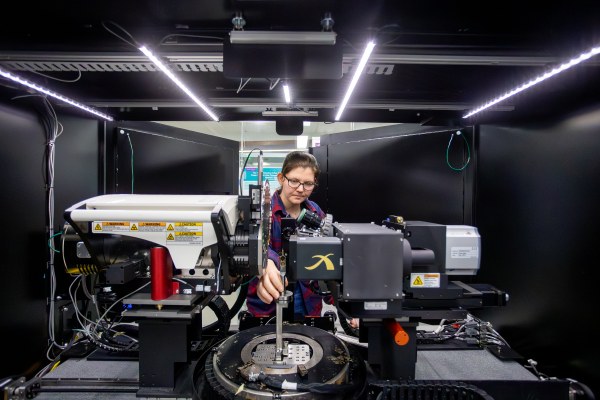
Photon Science Institute
Driving innovation in green hydrogen production through electrocatalyst research, supported by world-class laser and spectroscopy facilities.
Facilities in the Photon Science Institute -
3. Henry Royce Institute
 The University of Manchester
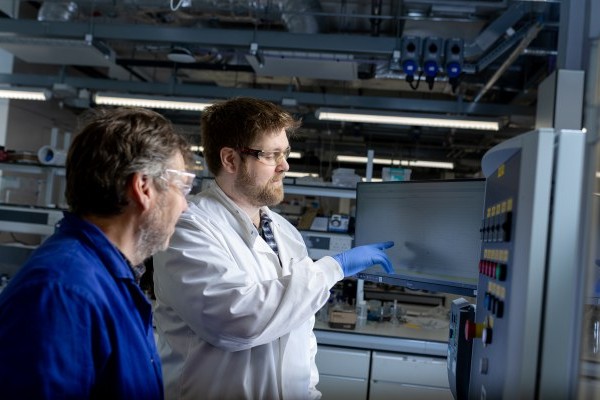
Henry Royce Institute
The UK’s hub for materials research, specialising in innovation for low-carbon hydrogen production. The institute offers £150 million in facilities accessible to academic and industry materials innovation.
Facilities in the Henry Royce Institute -
4. National Graphene Institute
 The University of Manchester
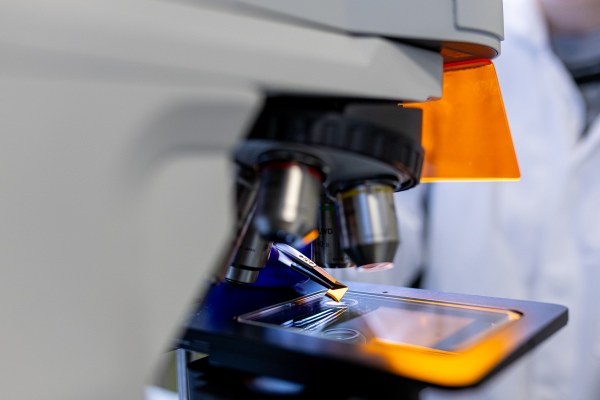
National Graphene Institute
A global leader in 2D material innovation, featuring 150 m² of advanced cleanrooms for low TRL research in catalysis, hydrogen sieving and porous materials used as membranes.
Facilities in the National Graphene Institute -
5. Engineering Campus
 The University of Manchester
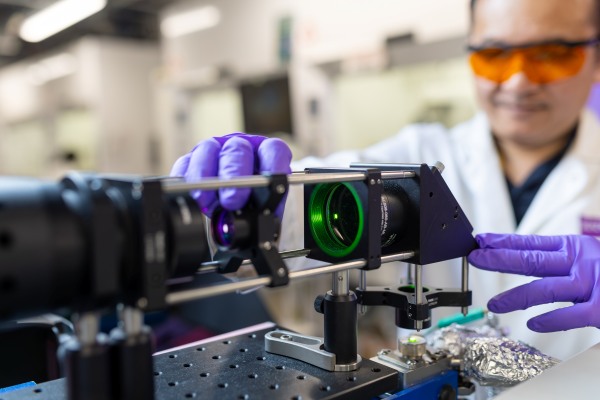
Engineering Campus
Convening interdisciplinary experts in photocatalysis, fuel cells, redox flow batteries, electrolysers, subsurface storage, and separation.
Facilities on the Engineering Campus -
6. Manchester Environmental Research Institute
 The University of Manchester
Manchester Environmental Research Institute
Established in 2018, the institute leads pioneering work in hydrogen subsurface storage, uniting experts across disciplines to tackle today’s environmental challenges.
Facilities in Manchester Environmental Research Institute -
7. Tyndall Centre for Climate Change Research
 The University of Manchester
Tyndall Centre for Climate Change Research
Bringing together natural scientists, engineers, social scientists and economists to address policy and societal challenges in renewable energy, bio-waste and sustainable heating.
Facilities in the Tyndall Centre for Climate Change Research -
8. Thomas Ashton Institute for Risk and Regulatory Research
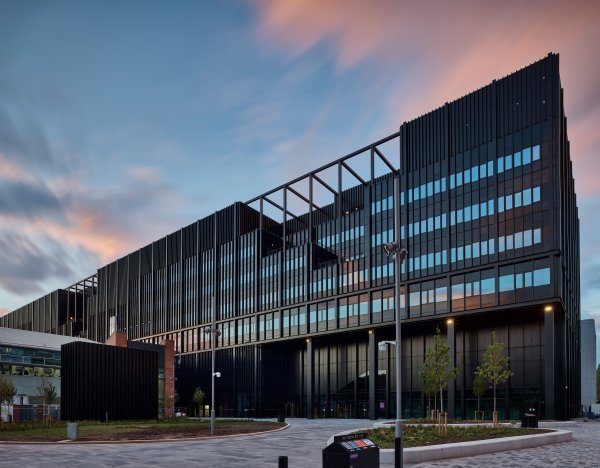 The University of Manchester
Thomas Ashton Institute for Risk and Regulatory Research
A partnership between The University of Manchester and the Health and Safety Executive conducting pioneering hydrogen safety research, supported by large-scale experimental and testing facilities at the HSE Science and Research Centre in Buxton.
Facilities in the Thomas Ashton Institute for Risk and Regulatory Research -
9. Industrial Hub for Sustainable Engineering
 The University of Manchester
Industrial Hub for Sustainable Engineering
A 200m² multi-storey facility offering industry partners vital support to scale clean fuel and digital manufacturing technologies from research to pilot stage.
Facilities in Industrial Hub for Sustainable Engineering -
10. Dalton Nuclear Institute
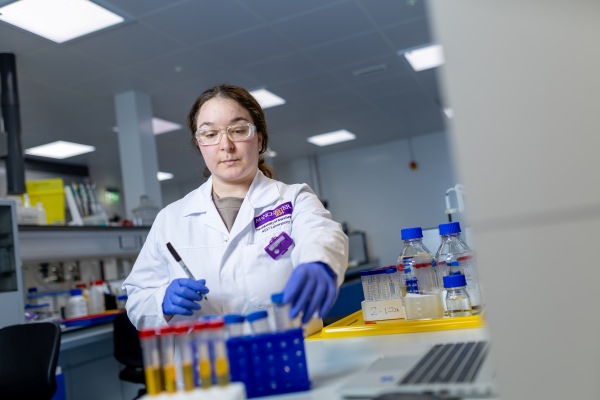 The University of Manchester
Dalton Nuclear Institute
Focused research in high-temperature electrolysis and thermochemical processes for large-scale hydrogen production, uniting expertise across three University of Manchester faculties to drive UK nuclear innovation.
Facilities in Dalton Nuclear Institute -
11. Graphene Engineering Innovation Centre
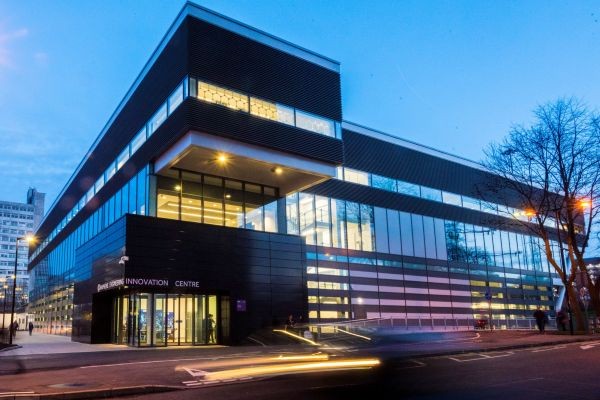 The University of Manchester
Graphene Engineering Innovation Centre
Accelerates the lab-to-market development of fuel cells and membranes for electrolysis using graphene and 2D materials, driving industry-led innovation across multiple sectors including energy, composites and construction.
Facilities in the Graphene Engineering Innovation Centre -
12. Manchester Fuel Cell Innovation Centre
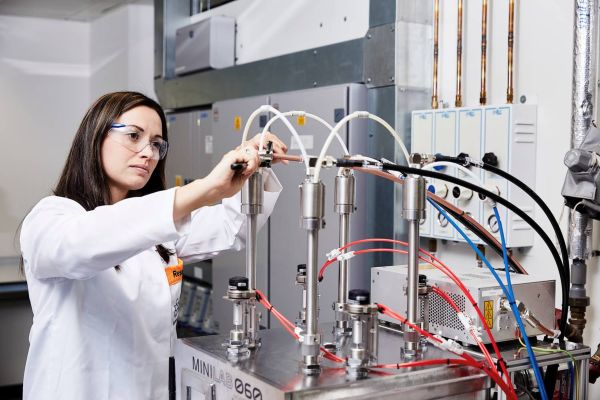 Manchester Metropolitan University
Manchester Fuel Cell Innovation Centre
The Manchester Fuel Cell Innovation Centre at Manchester Metropolitan University delivers applied research in hydrogen energy systems, focusing on fuel cells, storage, and system integration across transport and power applications. It enables industry collaboration and supports innovation across multiple technology readiness levels, accelerating scalable low-carbon solutions.
Facilities in the Manchester Fuel Cell Innovation Centre
Our hydrogen expertise
We’re driving innovation across every stage of the hydrogen supply chain.
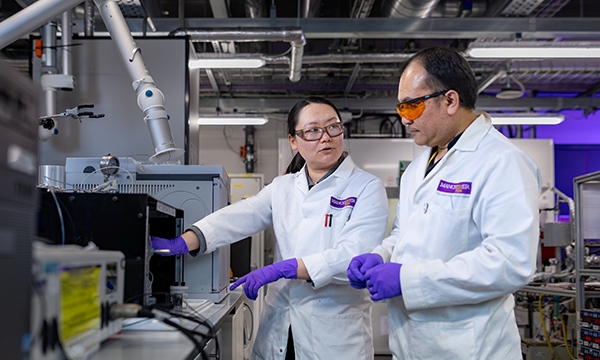
Production
Our research focuses on cutting-edge techniques to generate green hydrogen, including advanced photocatalysis and high temperature electrolysis. Bringing together expertise in chemistry, materials and engineering to enable greater efficiency and lower costs. This work supports scaling production and integrating renewable energy at industrial levels.
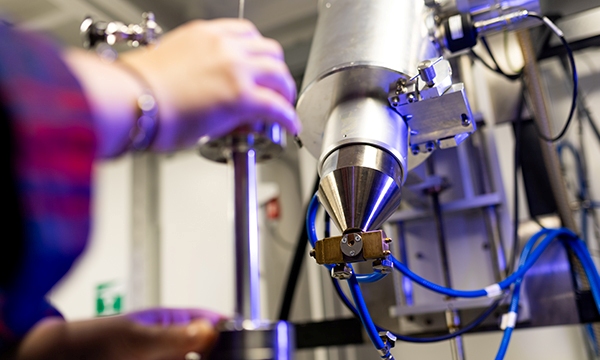
Delivery and storage
We’re pioneering safe and reliable ways to store and transport hydrogen. This includes subsurface storage, new materials and improved infrastructure systems. By tackling challenges around safety, capacity and performance, we’re ensuring hydrogen can be delivered where it is needed at scale.
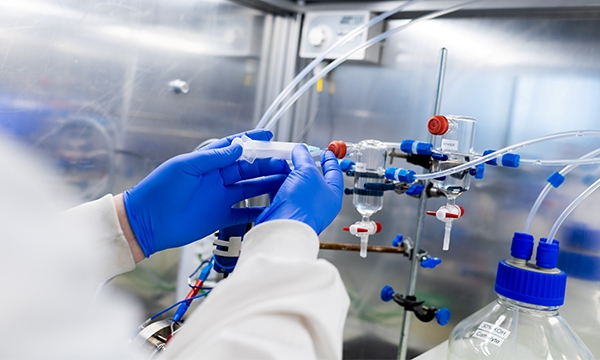
Usage
We’re exploring the use of hydrogen across transport, industry and the built environment. Our work covers fuel cells, energy systems and practical deployment in real world settings. The focus is on turning research into application to support widespread adoption.
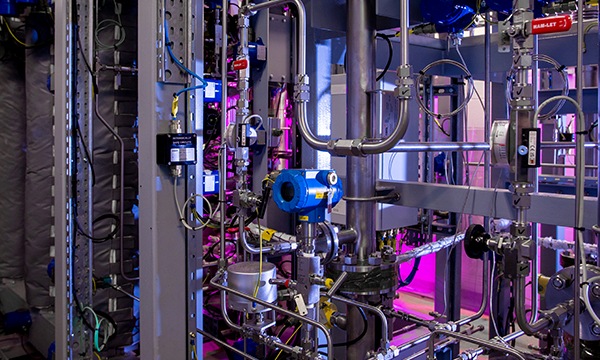
Economics
We’re ensuring hydrogen’s clean energy solutions are commercially viable and scalable for widespread adoption. Our research looks at cost reduction, supply chains and market opportunities. By working with industry and policymakers, we’re supporting investment and helping bring hydrogen technologies to market.
Sustainability
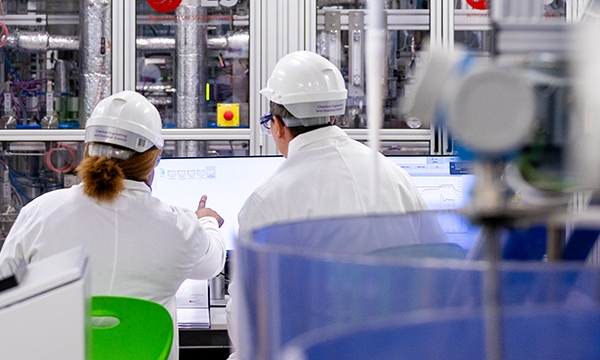
Sustainability underpins everything we do. Hydrogen solutions are designed to reduce emissions, consider environmental impact and maximise resource efficiency to ensure hydrogen plays a meaningful role in the transition to net zero.
Real-world impacts
Research impact
Latest hydrogen research
Explore recent publications and research outputs from the Hydrogen Research Corridor.
Our people
Our people
- Chamil Abeykoon - Senior Lecturer
- Judith Apsley - Senior Lecturer
- Akin Atas - Lecturer in Engineering Design For Sustainability
- Martin Attfield - Reader
- Adisa Azapagic - Professor of Sustainable Chemical Engineering
- Masoud Babaei - Senior Lecturer in Subsurface Energy Engineering
- Naji Bassil - Honorary Research Fellow
- Robert Bellamy - Senior Lecturer in Geography
- William Bodel - Dalton Fellow in Nuclear Energy Policy
- Neil Bourne - Professor of Matter in Extreme Environment
- Stefan Bouzarovski - Professor of Geography
- Radha Boya - Professor of Nanoscience
- Peter Budd - Professor of Polymer Chemistry
- Gregg Butler - Professor
- Sarayute Chansai - Research Associate
- Igor Chernyavsky - Senior Lecturer in Appied Mathematics
- Diarmaid Clery - Lecturer (Engineering for Net Zero)
- Hugh Coe - Professor of Atmospheric Composition
- Brian Connolly - Reader in Corrosion Performance
- Frederick Currell - Professor of Chemistry
- Carmine D'Agostino - Senior Lecturer in Chemical Engineering
- Robert Dryfe - Professor of Physical Chemistry
- Obuks Ejohwomu - Reader in Project Management
- Dirk Engelberg - Professor in Materials Performance & Corrosion
- James Evans - Professor of Human Geography
- Xiaolei Fan - Professor of Chemical Engineering
- Wendy Flavell - Emeritus Professor
- Aoife Foley - Chair in Net Zero Infrastructure
- Andrew Forsyth - Professor of Power Electronics
- Muir Freer - Research Associate
- Arthur Garforth - Professor of Catalysis
- Andre Geim - Professor of Condensed Matter Physics
- Clair Gough - Senior Research Fellow in Energy and Climate Change
- Anthony Green - Professor in Organic Chemistry
- Sarah Haigh - Professor of Materials
- Chris Hardacre - Professor of Chemical Engineering
- Julien Harou - Professor in Water Engineering
- Greg Holland - Senior Lecturer in Terrestrial Noble Gas Geochemistry
- Michael Hodson - Professor of Cities Innovation & Society
- Cathy Hollis - Professor of Carbonate Geoscience
- Stuart Holmes - Professor in Chemical Engineering
- Mads Huuse - Professor of Geophysics
- Matteo Iacchetti - Senior Lecturer
- Andrey Jivkov - Professor of Solid Mechanics
- Vahid Joekar-Niasar - Professor
- Christopher Jones - Knowledge Exchange Fellow
- Nikolas Kaltsoyannis - Professor of Computational Chemistry
- Amir Keshmiri - Reader in Computational Fluid Dynamics
- Jaise Kuriakose - Lecturer Climate Change & Resilience
- Alice Larkin - Professor in Climate Science & Energy Policy
- Amanda Lea-Langton - Senior Lecturer in Bioenergy Engineering
- David Lewis - Professor of Materials Chemistry
- Kexue Li - Technical Specialist NanoSIMS
- Lin Li - Emeritus Professor
- Sarah Lindley - Professor of Geography
- Francis Livens - Professor of Radiochemistry
- Jon Lloyd - Professor of Geomicrobiology
- Marcelo Lozada Hidalgo - Royal Society University Research Fellow
- Lin Ma - Senior Lecturer in Geoenergy
- Sherilyn Macgregor - Professor of Environmental Politics
- Philip Martin - Professor of Chemical Engineering
- Eduardo Martinez-Cesena - Senior Lecturer in Multi-Energy Systems
- Juan Matthews - Visiting Professor in Nuclear Energy Technology
- Carly McLachlan - Professor in Climate Science & Energy Policy
- Andrew McMeekin - Professor of Innovation
- Katie Moore - Senior Lecturer in Materials Characterisation
- Rahul Nair - Professor of Materials Physics
- Sophie Nixon - Professor Environmental Microbiology
- Maria Perez-Page - Lecturer in Chemical Engineering
- Ernest Rutter - Emeritus Professor
- Lev Sarkisov - Professor of Chemical Engineering
- Fabio Scenini - Professor in Materials Performance
- Martin Schroder - Professor of Chemistry
- Nigel Scrutton - Professor of Molecular Enzymology
- Flor Siperstein - Professor in Molecular Engineering
- Alexander Smith - Professor of Electrical Machines
- Vincenzo Spallina - Full Professor in Chemical Engineering
- Laurence Stamford - Senior Lecturer in Sustainable Chemical Engineering
- Kevin Taylor - Professor of Sedimentology and Tectonics
- Nicholas Turner - Emeritus Professor
- Alex Walton - Senior Lecturer in Chemistry
- Andrew Welfle - Senior Research Fellow
- Christopher Whitehead - Emeritus Professor
- Nan Zhang - Senior Lecturer