

Electrochemical energy
We are engineering materials for electrochemical energy devices combining material synthesis, advance characterisation and modelling to improve performance, mass transport and durability.
Internationally and multidisciplinary leading group in electrochemical energy.

Experience in collaborating with industrial partners and Universities around the world.

£8M+ in funding secured since 2020.

More than 200 publications.

Supporting the transition to low-carbon energy systems
We develop advanced materials and diagnostic tools to improve clean energy technologies.
Combining membrane and catalyst design with advanced characterisation and modelling, our research improves the efficiency, durability and scalability of fuel cells, redox flow batteries and water electrolysers, supporting the transition to sustainable, low-carbon energy systems.
The drive to net zero is being hindered by the cost and efficiency of the materials in the technology. Our research underpins the increase in efficiency reduction in cost, and optimises the performance of the materials involved in electrochemical processes.
Stuart Holmes - Group Lead and Professor of Chemical Engineering
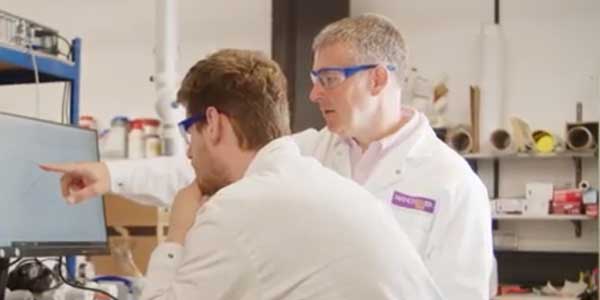
Research
Our areas of research
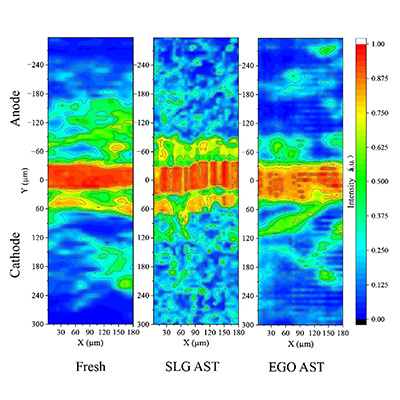
Advanced diagnostics and characterisation
In-situ electrochemical characterisation is being done of the new materials within the corresponding electrochemical device using conventional diagnostic techniques, including voltage–current (polarisation) analysis and electrochemical impedance spectroscopy.
To gain deeper insight into the thermodynamic, kinetic, and transport phenomena governing material performance during operation, advanced characterisation techniques are employed. These include in situ and operando methods such as X-ray tomographic microscopy, spectroscopic techniques, and neutron-based analyses, enabling a comprehensive understanding of structural and functional behaviour under realistic operating conditions
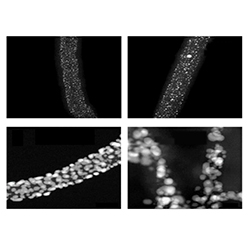
Enhancing catalyst layers
We develop new carbon support for catalyst and ionomers structures for the catalyst to improve kinetics, mass transport and degradation of the catalyst.
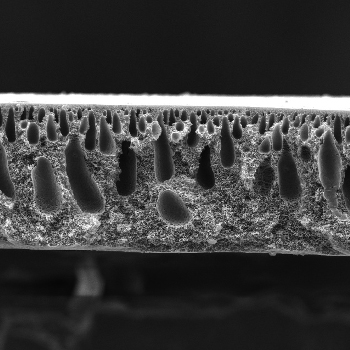
Ion-exchange membranes
Highly selective membranes are designed to reduce the crossover of active species and phosphoric acid leaching, enhancing efficiency, durability, and overall performance of the different devices.
2D material-based membranes: We incorporate two-dimensional materials, including graphene and graphene derivatives, either within the membrane matrix or as ultrathin selective layers, enabling precise control over transport properties and selectivity.
Advance polymers architectures: We have developed novel strategies to fabricate more stable polymers porous frameworks to retain the phosphoric acid.
Modelling
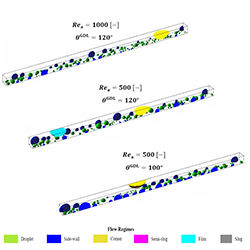
We develop multiscale models to simulate different components of PEMEL / PEMFC or Redox flow batteries. We use technologies such as volume-of-fluid method, lattice Boltzmann to simulate flow, transport, reaction, electrochemical transport. The models have been successfully applied to various applications.
Connect with us
Our people
- Stuart Holmes - Professor of Chemical Engineering
- Vahid Joekar - Niasar - Professor in Chemical Engineering
- Maria Perez - Page - Lecturer in Chemical Engineering
- Zhiming Feng
- Pablo Lopez Porfiri - Research Associate
Get in touch
Contact our team
For business and general inquiries, contact Professor Stuart Holmes: