

Mechanics
Engineering the physics of materials, structures and dynamics for safer infrastructure, sustainable energy systems and resilient technologies across industries and scales.
£6M+ in research funding secured since 2020.

Partners include EDF Energy, Rolls-Royce, DSTL, Cummins, UKAEA, Amentum, HSE.

Leader of the Fusion Engineering Centre for Doctoral Training.

Support the Thomas Ashton Institute, Henry Royce Institute, Dalton Nuclear Institute and Modelling and Simulation Centre.

Foundations for high-performance engineering
We redefine predictive mechanics across scales – linking microstructure, welding and residual stress with structural integrity and dynamic response.
Through new physics-grounded and discrete formulations, integrated with scaled experimentation and industrial collaboration, we reshape how high-performance mechanical systems are represented, predicted and controlled.
Our leadership in dynamics and vibration control strengthens the reliability and longevity of critical mechanical infrastructure.
Engineering advances when we understand not only how systems perform but also why they fail. Our role is to strengthen the mechanics that underpin design so that materials and structures can operate safely and reliably in regimes once thought unattainable.
Professor Andrey Jivkov - Group Lead

Research
Our areas of research
Biomechanics
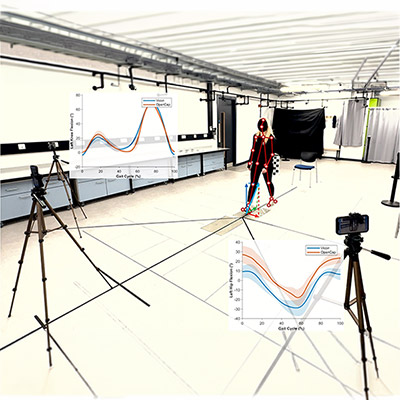
Our research in biomechanics employs principles in mechanics, fluid dynamics and robotics to understand biological systems and develop healthcare technologies. Our work spans multiple scales, from tissue engineering and physiological flows to human movement and rehabilitation. Experimental and computational techniques are used to analyse cardiovascular haemodynamics, including arterial pressure dynamics, and to study musculoskeletal function using motion capture, wearable sensors and gait analysis.
Complementary research in biomaterials, biofabrication and soft robotics supports the development of medical devices, tissue-engineered systems and assistive technologies. Together, these activities integrate modelling, experiments and advanced manufacturing to address challenges in healthcare engineering and personalised medicine.
Foundations and representations in mechanics
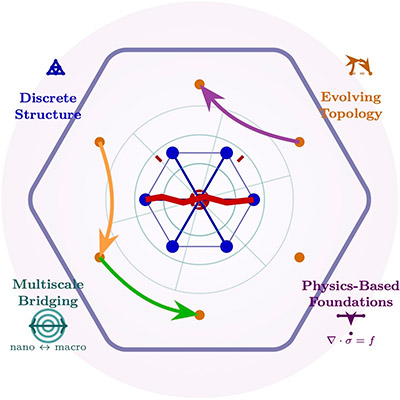
Mechanics depends on how physical systems are represented. We advance new physics-based and discrete formulations that treat structure and connectivity as primary, rather than derived from continuum fields. This enables intrinsic multiscale descriptions of deformation, damage and transport in materials and mechanical assemblies.
By linking mathematical foundations with computation and experiment, we provide rigorous and practical frameworks for analysing complex engineering systems. These formulations support scale-bridging calibration, data-informed modelling and the systematic treatment of evolving topology, allowing engineers to predict behaviour in regimes where conventional continuum models lose validity. In doing so, we establish durable foundations for next-generation computational mechanics and engineering design.
Mechanics for fusion engineering
Fusion engineering is defined by demanding mechanics challenges: neutron‑driven defect evolution, steep heat loads, plasma‑surface erosion, and hydrogen isotope trapping that drives embrittlement and fuel‑cycle loss. These effects interact across scales, making lifetime prediction and structural reliability exceptionally difficult.
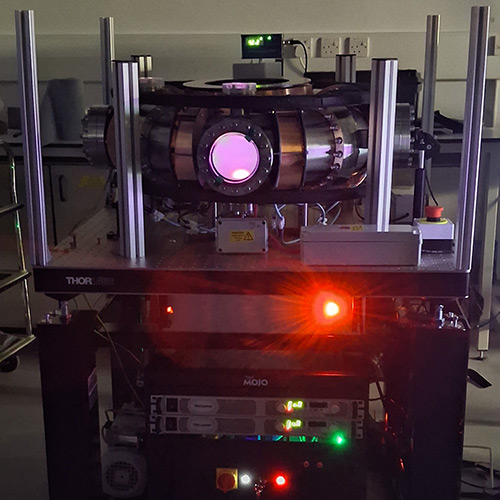
A digital twin, built from reduced plasma, heat‑transfer and mechanics models, provides a way to explore these coupled behaviours, test assumptions about microstructure, and evaluate operating envelopes rapidly. Our workbench‑scale tokamak serves as an accessible platform to generate well‑controlled pulses and surface‑response data that help validate and calibrate elements of the twin.
This combined approach acts as a stepping stone to national fusion devices and eventually Spherical Tokamak for Energy Production (STEP), building the modelling capability, experimental practice and engineering intuition needed for future high‑power facilities.
Vibrations and control
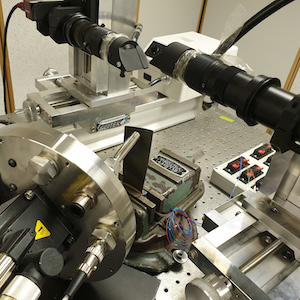
Our researchers are world leaders in the modelling and control of the dynamic performance of engineering structures, focusing on rotating machinery dynamics, structural and machinery health monitoring, vibration control, vibration energy harvesting, and wireless sensing. Among various industry-linked projects, we support the rapidly expanding field of environmentally friendly oil-free turbomachinery technology through experiments and multi-physics modelling and simulation.
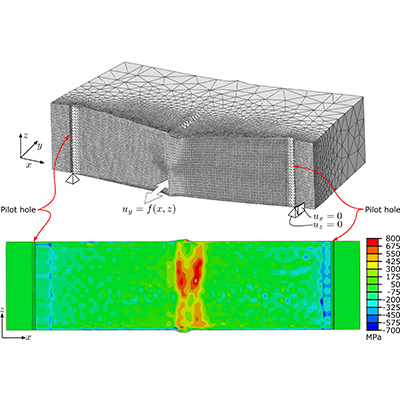
Weld integrity and structural performance
We combine an understanding of the physics of welding processes, metallurgy, computational mechanics and machine learning to assess advanced joining and additive manufacturing technologies and to support safety cases for high-integrity components. We have the unique capability to combine the manufacture of instrumented welds on a scale that is industrially relevant with the characterisation of microstructures and residual stresses, the modelling of microstructural evolution and its validation though the physical simulation of thermomechanical cycles, and the numerical prediction of residual stress distributions validated with through-thickness measurements.
Our partners span a broad range of industry sectors, with a particular focus on current and future (Gen IV) fission reactors and joining challenges for fusion applications.
Study with us
Explore postgraduate options in mechanics
- We lead the Fusion Engineering Centre for Doctoral Training, providing unique research training to STEM graduates, helping them develop skills to design, build and operate the first fusion energy power plants.
- We have doctoral projects linked to the SATURN Centre for Doctoral Training.
- We contribute to the delivery of master's degrees in mechanical and aerospace engineering, as well as to continuing professional development (CPD) courses in nuclear science and technology..
Connect with us
Our people
- Dimitrios Bikos - Lecturer in Data Driven Solid Mechanics
- Philip Bonello - Reader in Engineering Dynamics | Turbomachinery and vibrations
- Elijah Borodin - Lecturer in Solid Mechanics | Fundamental models and new materials | Fracture
- Neil Bourne - Professor of Matter in Extreme Environments | Transdisciplinary risk
- Keith Davey - Reader in Structural, Materials and Mechanical Engineering | Scaling and scaled experimentation manufacturing
- John Francis - Professor of Materials Welding and Joining | Welding and additive manufacturing
- Damien Freitas - Research Fellow | 4D synchrotron imaging
- Andrey Jivkov - Professor of Solid Mechanics | Fundamental models and new materials
- Kali-Babu Katnam - Senior Lecturer in Structural Engineering | Fundamental models and new materials | Fracture
- Qingming Li - Professor of Applied Mechanics | Impact engineering
- Parthasarathi Mandal - Reader in Bioengineering | Bioengineering and structural mechanics
- Lee Margetts - UKAEA Chair of Digital Engineering for Fusion Energy | Fusion technology
- Sunday Oyadiji - Reader | Turbomachinery and vibrations
- Matthew Roy - Senior Lecturer in Materials for Demanding Environments | Welding and additive manufacturing
- Jyoti Sinha - Professor of Condition Monitoring and Plant Maintenance | Reliability engineering
- Mike C Smith - Professor of Welding Technology | Welding and additive manufacturing
- Azam Tafreshi - Lecturer in Engineering | Fracture
- Giacomo Torelli - Senior Lecturer in Solid Mechanics
- Anastasia Vasileiou - Lecturer | Welding and additive manufacturing
- Zhenmin Zhou - Lecturer | Bioengineering and structural mechanics
- Adam Barker
- Kiprian Berbatov
- Zeng Chen
- Ava Khajeian
- Jongyun Kim
- Robin Laurence
- Jingjiang Li
- Zeyuan Miao
- William Smith
- Raska Soemantoro
Get in touch
Contact our team
Interested in collaborating or want to learn more about the group’s work?
Get in touch with andrey.jivkov@manchester.ac.uk