

Multiscale modelling and simulation
We use multiscale modelling and experiments to push scientific boundaries and solve industrial challenges, from molecular behaviour to complex flows and process performance, helping design better materials, catalysts, devices and manufacturing systems.
Expertise from molecular simulation to computational fluid dynamics (CFD), machine learning and liquid theory.

Industrial collaborations with BP, Unilever, AstraZeneca, IBM and more.

Access to the University's computational shared facility (19,632 CPU cores, 152 GPUs) and world-leading high-performance computing infrastructure.

Novel imaging tools, computational frameworks, automated platforms and labs for flow, particles, crystallisation, filtration, adsorption and solvent extraction.

Transforming materials, processes and products
We combine machine learning, modelling, simulation and experiments to understand and optimise materials, processes and products.
Our research helps industry predict performance, reduce trial-and-error development and create more effective products and manufacturing systems, with applications spanning pharmaceuticals and personal care to carbon capture and advanced materials.
We combine machine learning, modelling, simulation, fundamental theory and experiments to understand the physical properties of fluids and solids.
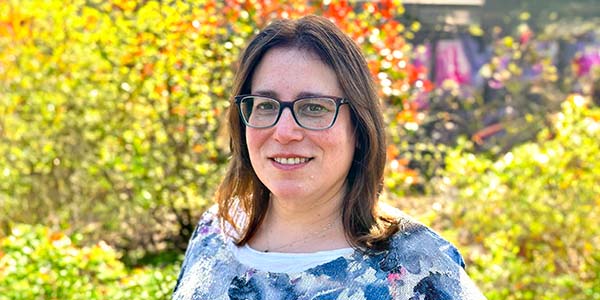
Flor Siperstein - Group Lead and Professor of Molecular Engineering
Research
Our areas of research
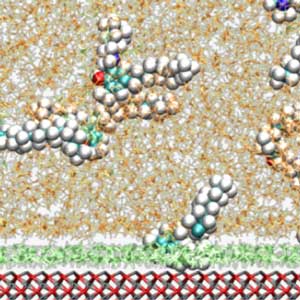
Atomistic simulations
We use density functional theory (DFT), molecular dynamics and Monte Carlo simulations to understand how molecules behave and interact, helping predict the properties of industrially relevant fluids and materials. This supports applications including fuel additives, protective coatings, carbon capture materials, nuclear related processes, biotechnological design and porous materials stability.
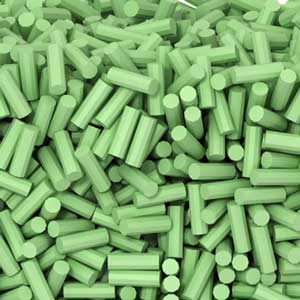
Coarse-grained modelling
By simplifying complex molecular and colloidal systems, we can model self-assembly, transport and rheology at useful scales. This enables predictive work on surfactants, healthcare formulations, proteins, polymers and advanced functional materials.
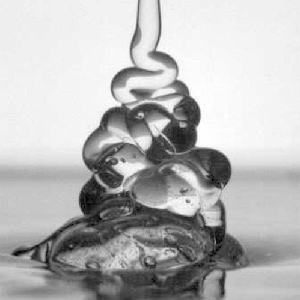
Continuum-scale fluid simulations
We apply computational fluid dynamics, supported by lab-based characterisation and flow visualisation to solve industrial flow problems involving complex fluids. This helps improve processes such as dispensing and bottle filling, and also supports work on mass transfer in gas-liquid flows.
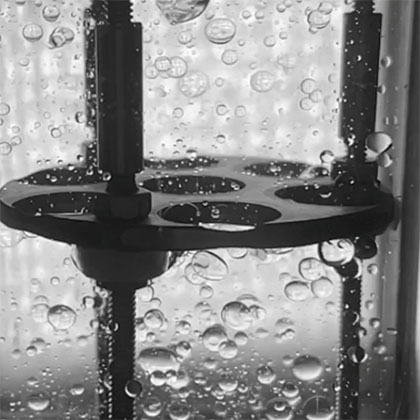
Crystallisation, adsorption, solvent extraction and membrane separations
We combine computational fluid dynamics, population balance models and process simulation to optimise crystallisation, filtration, mixing, adsorption, solvent extraction and membrane systems. We build automated experimental platform to support fast condition screening. This supports more efficient manufacturing, carbon capture, direct air capture and sustainable separations.
AI-enabled reactor and flow-system design- By combining computational fluid dynamics, deep learning, optimisation and digital manufacturing, we create intelligent design platforms that can explore hundreds of potential reactor and flow-field designs far beyond what is feasible experimentally. This accelerates the development of technologies for energy, pharma, sustainable manufacturing and agrochemical delivery, helping transform engineering design from a manual process into an autonomous discovery workflow.
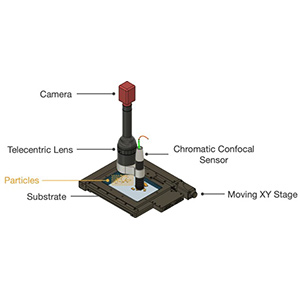
Monitoring particulate processes
We develop bespoke imaging tools, including DISCO and Petroscope, to characterise micron-scale particles in fine chemical manufacturing, including pharmaceuticals and agrochemicals. These tools provide detailed particle size and shape data to support quality control and process optimisation, alongside related work such as filter cake characterisation.
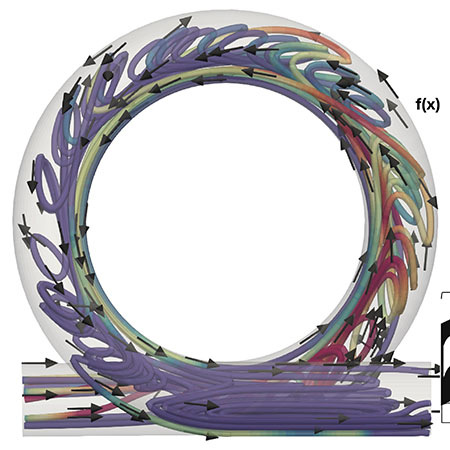
AI-enabled reactor and flow-system design
By combining computational fluid dynamics, deep learning, optimisation and digital manufacturing, we create intelligent design platforms that can explore hundreds of potential reactor and flow-field designs far beyond what is feasible experimentally. This accelerates the development of technologies for energy, pharma, sustainable manufacturing and agrochemical delivery, helping transform engineering design from a manual process into an autonomous discovery workflow.
Study with us
Your career in multiscale modelling starts here!
We always have a number of exciting PhD projects available for top PhD applicants.
Browse through the projects available in our doctoral research section.
Connect with us
Our people
- Carlos Avendaño – Reader
- Nausheen Basha- Lecturer in Chemical Engineering
- Sam de Visser – Reader in Computational Biocatalysis
- Steph Flores – Dame Kathleen Ollerenshaw - Unilever Fellow
- Claudio Fonte – Senior Lecturer in Chemical Engineering
- Andrew Masters – Professor of Chemical Physics
- Ashwin Rajagopalan – Senior Lecturer in Chemical Engineering
- Lev Sarkisov – Professor of Chemical Engineering
- Flor Siperstein – Group lead / Professor of Molecular Engineering
- Jiyizhe Zhang – Lecturer in Chemical Engineering
Get in touch
Contact our team
For business, general enquiries and research collaborations contact Professor Flor Siperstein: