

Subsurface energy systems
Engineering solutions for subsurface energy storage, geothermal energy, waste disposal, and enhanced hydrocarbon recovery by integrating characterisation, imaging, modelling, and experiments.
#12 globally for petroleum engineering (QS 2026).

World-class labs for rock, fluid and multiphase characterisation.

In-house developed pore-scale models driving successful spin-out.

Strategic partnerships with global energy leaders.

Powering the energy transition
We develop subsurface engineering solutions to support energy security and the transition to net zero.
Combining imaging, characterisation, modelling and experimentation, our research enables safer, more efficient use of the subsurface for hydrocarbon recovery, CO₂ and hydrogen storage, geothermal energy and waste management.
The subsurface sits at the heart of energy, environment and society. Its role is evolving from hydrocarbons to a diverse energy future. Meeting this challenge requires integration, bringing together expertise, technologies and insights from different disciplines to enable sustainable solutions.
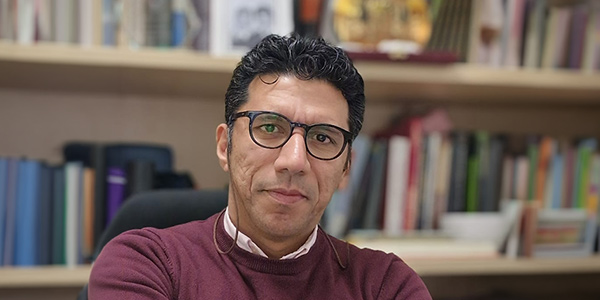
Vahid Niasar - Group Lead and Professor of Subsurface Engineering and Porous Media Physics
Research
Our areas of research
Geothermal energy systems
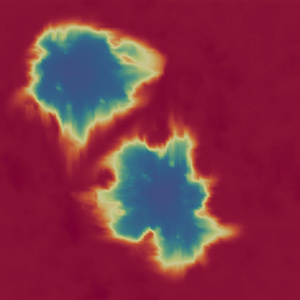
We study fluid flow, heat transfer and coupled processes in geothermal systems across scales. Integrating experiments, imaging and modelling, we assess reservoir performance, sustainability and operational efficiency. Our multiscale and data-driven approaches enable optimisation and risk reduction in geothermal deployment. This work supports the development of reliable, low-carbon energy systems, contributing to the diversification of the energy mix and long-term sustainability.
Multiphase flow and enhanced hydrocarbon recovery
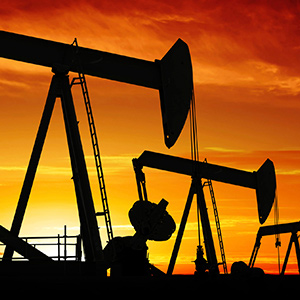
We investigate multiphase flow, transport and reactive processes to optimise hydrocarbon recovery in complex reservoirs. Combining core flooding, rheology, imaging and modelling, we uncover displacement, trapping and mixing mechanisms across scales. This enables improved recovery efficiency using various recovery technologies (e.g. polymer flooding, low salinity waterflooding, surfactant flooding, thermal). Our work translates fundamental understanding into practical strategies for reservoir management, extending asset life and supporting a responsible energy transition.
Multiscale modelling and digital subsurface
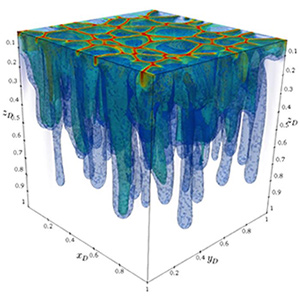
We develop multiscale modelling frameworks linking molecular dynamics, pore-, core- and reservoir-scale behaviour to capture the fundamental physics of fluid–rock interactions. By integrating physics-based models with AI and data-driven methods, we create predictive digital twins of subsurface systems. These tools enable robust simulation, optimisation and uncertainty quantification, supporting the design and deployment of energy and environmental technologies. Our approach bridges laboratory insight and field-scale performance, accelerating innovation and reducing risk in real-world applications.
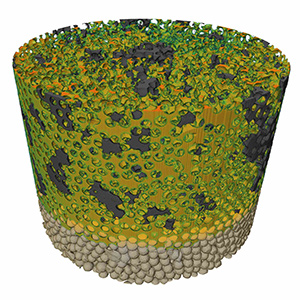
Subsurface imaging, characterisation and experimental systems
We employ advanced imaging (3D/4D X-ray tomography, electron microscopy, optical imaging, microPIV), core flooding, rheology, multiphase flow and coupled mechanical experiments under subsurface conditions to resolve structure, properties and dynamic behaviour in complex porous media. These integrated platforms quantify heterogeneity, wettability and flow processes across scales. The resulting high-fidelity datasets underpin model development and validation, enabling physically grounded predictions. Our experimental capability provides critical insight for designing and optimising subsurface systems under realistic conditions.
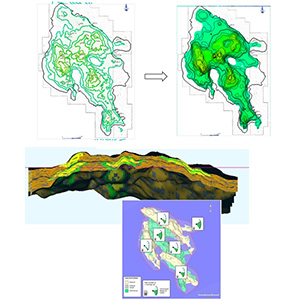
Subsurface storage and waste disposal
We develop and assess subsurface storage solutions (for CO₂, hydrogen and compressed air) or subsurface waste disposal (for nuclear wastes), focusing on storage efficiency, injectivity, containment and long-term stability. By integrating experiments, imaging and multiscale modelling, we evaluate performance under realistic geological conditions. Digital twins enable predictive assessment and optimisation of storage operations. Our work supports the safe, scalable deployment of storage technologies essential for energy security and achieving Net Zero targets.
Study with us
Your career in subsurface energy systems starts here!
You can find relevant postgraduate research programmes and PhD projects on our Department page.
Master's courses relevant to our group are:
Subject to approval, we offer CPD and bespoke training across our research areas, tailored to meet industry needs. Contact Professor Vahid Niasar to discuss opportunities.
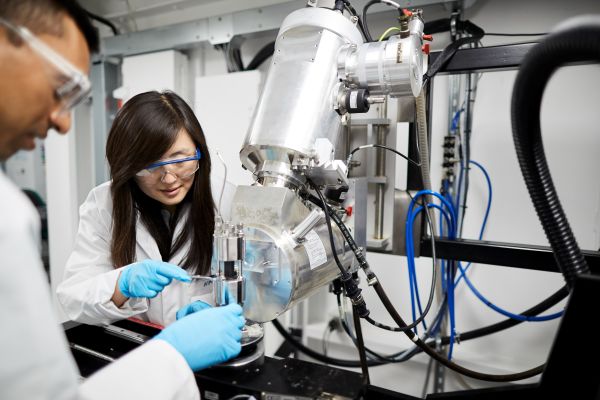
Connect with us
Our people
- Masoud Babaei - Senior Lecturer in Subsurface Energy Engineering
- Mehrdad Farahani - Lecturer in Chemical Engineering
- Lin Ma - Reader in Chemical Engineering
- Vahid Niasar - Professor of Subsurface Engineering and Porous Media Physics
Get in touch
Contact our team
For research and industry partnerships to explore collaboration, consultancy or bespoke training, please contact Professor Vahid Niasar: vahid.niasar@manchester.ac.uk
For MSc Programme on Subsurface Energy Engineering, please contact Dr Masoud Babaei: masoud.babaei@manchester.ac.uk
For Internationalisation affairs, please contact Dr Lin Ma: lin.ma@manchester.ac.uk
For PhD enquiries, please contact the relevant academic and subject area lead.