

Doctoral Training Programmes
What are doctoral training programmes?
Our doctoral training programmes provide the opportunity to complete your PhD within a cohort of researchers, in a nationally recognised priority research area, fully funded by UKRI Research Councils.
A unique way to work towards your PhD, you will receive valuable skills and training alongside your research and will be working on a priority research area identified by the UK government.
Why should I study in a doctoral training programme?

Community
You will join a cohort of researchers across multiple disciplines and UK universities so you will have a network of fellow PhD students and supervisors in your research area. Our established doctoral training programmes have several cohorts from previous intakes forming large and welcoming research communities.

Enhanced training
Your cohort group will receive technical and non-technical training as part of the programme, where you will learn transferable skills for research and industry to help boost your future career. Many of our doctoral training programmes also include master’s-level training during the first year of the programme where you will study relevant modules related to your research area.

Industry experience
Many of our programmes offer the opportunity to work on industry-sponsored projects right at the forefront of UK research and innovation. You will get to see how your research impacts industry first-hand and gain valuable industry contacts and experience.

Collaborative research
Working closely with researchers from different disciplines and institutions, you will work together towards a specific research goal, allowing for collaborative learning and research.

Generous funding
Fully funded by UKRI research councils, your tuition fees are covered plus you will receive a generous stipend and may have the opportunity for additional funding from industry sponsors.
Centres for Doctoral Training (CDTs)
The main type of doctoral training programmes we offer are our Centres for Doctoral Training (CDTs). Funded by UKRI Research Councils and in partnership with other UK universities, you will be part of a cohort of researchers across institutions and will receive skills training while you gain your PhD.
Most CDTs also have industry sponsors, so you will have the opportunity to gain industry experience and contacts during the programme, helping to boost your future career.
We have several CDTs based here at The University of Manchester and we also partner with institutions to support CDTs hosted at other UK universities. You can visit each CDT website for further information and how to apply.
Doctoral Focal Awards (DFAs)
UKRI have introduced a new way of funding specific research projects with Doctoral Focal Awards. CDTs will be known as DFAs going forward, but there may also be new research-focused training programmes in the future funded by DFAs.
The purpose of a DFA is to invest in a strategic research theme identified by UKRI where collaborative research is needed to meet the challenges facing scientists and industry today. Spanning disciplines, institutions and research councils these awards bring together academic and non-academic partners to achieve their goals.
Broader research projects and programmes will be funded by Doctoral Landscape Awards (DLAs) or Industrial Doctoral Landscape Awards (IDLAs).
For more information about doctoral awards, visit the UKRI website.
Current doctoral training programmes
Manchester-based
2D Materials
EPSRC CDT in 2D Materials of Tomorrow
Led by Professor Irina Grigorieva, this CDT will focus on a new class of advanced materials with potential to transform modern technologies, from clean energy to quantum engineering.

Materials 4.0
EPSRC CDT in Developing National Capability for Materials 4.0
Led by Dr Rob Lindsay, this CDT aims to maximise the value of materials data and link the digital with the physical via cyber-physical systems for prediction, classification, and control of material performance.
Discover the Materials 4.0 CDT Explore the National Capability for Materials CDT
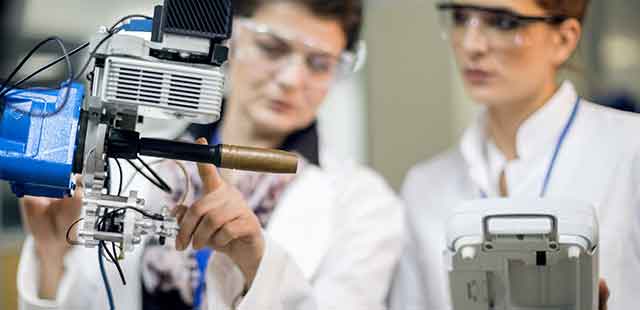
RAINZ
EPSRC CDT in Robotics and AI for Net Zero (RAINZ)
Led by Professor Simon Watson, this CDT will train and develop the next generation of multi-disciplinary robotic systems engineers to help revolutionise lifecycle asset management, in support of the UK’s Net Zero Strategy.
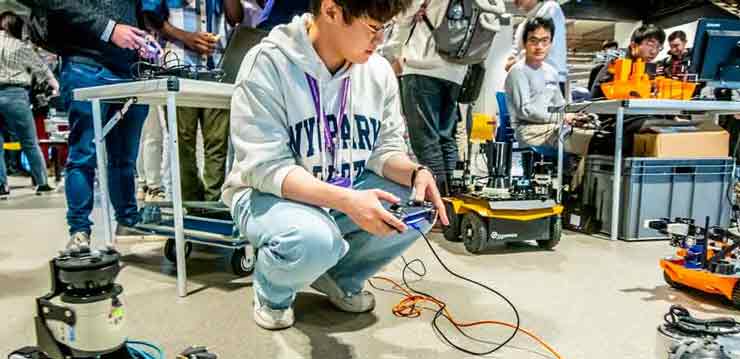
SATURN
EPSRC CDT in Skills and Training Underpinning a Renaissance in Nuclear (SATURN)
Led by Professor Joel Turner, the primary aim of SATURN is to provide high quality research training in science and engineering, underpinning nuclear fission technology.
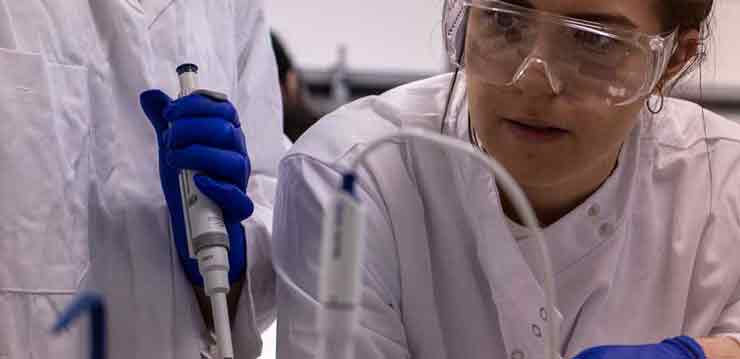
CODE-M
EPSRC and NERC Doctoral Focal Award in Control and Design of Bioengineered Microbial Cells and Systems (CODE-M)
Led by The University of Manchester, this DFA will train microbial bioengineers to tackle global challenges in health, prosperity and environmental sustainability.

BioProcess
BBSRC IDLA in Biocatalysis and protein engineering centre for sustainable synthesis (BioProcess)
Led by Professor Anthony Green this IDLA will train the next generation of scientists in the skills needed to realise the full potential of biocatalysis, protein engineering and biomanufacturing for the UK bioeconomy.

AI for Complex Systems
UKRI AI CDT in Decision Making for Complex Systems
Led by Dr Mauricio A Álvarez, this CDT will train the next generation of AI researchers to develop AI methods designed to accelerate new scientific discoveries.
Discover the AI CDT Explore the UKRI AI CDT in Decision Making for Complex Systems

Fusion Engineering
Fusion Engineering CDT
Funded by UKAEA and led by Professor Lee Margetts, this CDT will offer bespoke training for UK STEM graduates, to learn how to design, build and operate the first UK fusion energy power plant.
Discover the Fusion Engineering CDT Discover the Fusion Engineering CDT

Plutonium Ceramics
Plutonium Ceramics Hub
Funded by the Nuclear Decommissioning Authority and led by Dr Rob Harrison, the Hub will support around 20 fully funded PhD students to become technical specialists in the safe immobilisation of plutonium, one of the most pressing challenges in UK nuclear decommissioning.
Discover the Plutonium Ceramics Hub Discover the Plutonium Ceramics Hub
Manchester-partnered
Aerosol Science
EPSRC Centre for Doctoral Training in Aerosol Science
Based at the University of Bristol.

Compound Semiconductors
EPSRC Centre for Doctoral Training in Compound Semiconductor Manufacturing
Based at Cardiff University.
DRIVERS
EPSRC Doctoral Focal Award in Developing Researchers with an Interdisciplinary Vision for Engineering Reactor Systems (DRIVERS)
Based at Imperial College London.
Explore the DRIVERS Focal Award Explore the DRIVERS Doctoral Focal Award at Imperial College London
Fusion Power
EPSRC Centre for Doctoral Training in Fusion Power
Based at the University of York.
PANDA
EPSRC Doctoral Focal Award in Programme for Accelerating Nuclear Development and Applications (PANDA)
Based at Bangor University.
Explore the PANDA Focal Award Explore the PANDA Doctoral Focal Award at Bangor University
RAPTOR
EPSRC Doctoral Focal Award in Radiation Protection, Nuclear Safety and Environmental Sustainability (RAPTOR)
Based at the University of Liverpool.
BioAID
BBSRC Doctoral Training Programme in BioAID AI-Driven Enzyme Design for Industry Biocatalysis
Based at Queens University Belfast.

i-Risk
NERC Doctoral Focal Award in Informatics for Multi-hazard Risk Reduction (i-Risk)
Based at Loughborough University.
Discover the i-Risk Focal Award Explore the i-Risk Doctoral Focal Award on GitHub

Got a question?
For further information on a specific programme, please visit their website where you can find the relevant contact details.
Or you can use our interactive guide to find answers to commonly asked questions about doctoral training programmes here.